Free ebook · 3 min
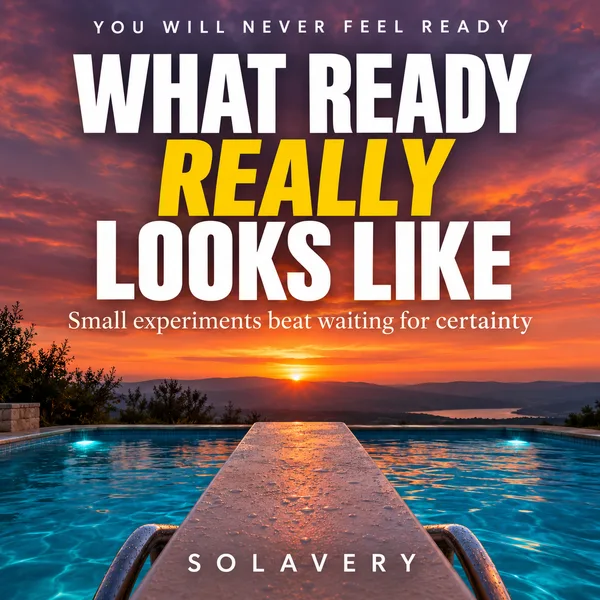
What Ready Really Looks Like
Challenge readiness myths and use small experiments to create clarity.
Learn to question perfection, fear of failure, rejection, and outside expectations so you can choose a practical next step.
- Pages
- 13
- Read Time
- 3 min
What's inside
This guide challenges the belief that founders must feel fully prepared before beginning. It uses reflective questions to examine failure, problem-solving, rejection, personal constraints, commitment, and inherited career expectations.
Question the Waiting Habit
Feeling unready can become a reason to postpone useful action.
- Identify the specific constraints behind your delay.
- Question the need for perfect timing.
- Choose an experiment that can generate new information.
Learn From Failure and Rejection
Experiments and sales conversations can produce learning as well as disappointment.
- Treat failed experiments as data about what to change.
- Break unfamiliar problems into parts you can work through.
- Ask why prospects reject the offer and what could improve the response.
Examine Commitment and Expectations
A founder’s choices should reflect real priorities and obligations.
- Consider financial responsibilities and available freedom to take risks.
- Reflect on the energy and commitment the startup receives.
- Distinguish your own goals from family or conventional career expectations.
Make the Next Move Concrete
Action creates feedback that planning alone cannot supply.
- Choose a small experiment you can start now.
- Plan how to handle rejection while continuing to learn.
- Draw lessons from different generations without assuming their experiences are identical.
Made for: Founders and would-be founders deciding what to build and how to keep going.
Then talk it through with Sol
Sol Avery is Solavery's founder coach. Sol is a virtual coach, not a person. Bring your own startup and work out what this book means for it.