Free ebook · 25 min
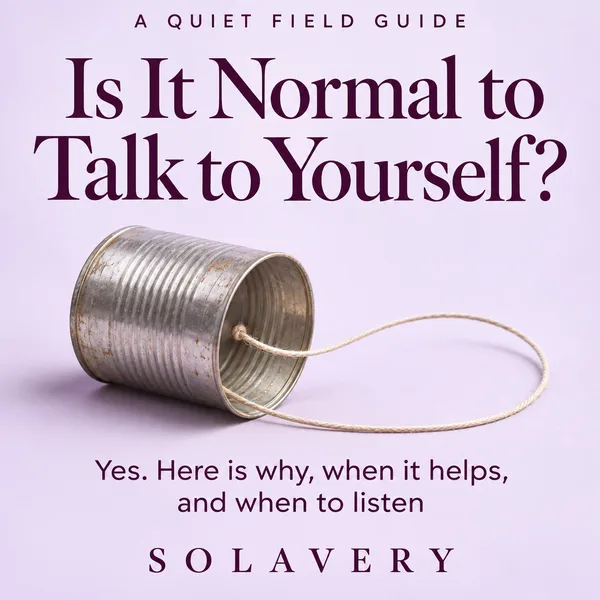
Is It Normal to Talk to Yourself? A Quiet Field Guide
Yes. Almost everyone does — every day. Here is why, when it helps, and when to listen more carefully.
Discover the psychology behind your inner voice, how to harness it for focus and motivation, and how to quiet it when it turns harsh.
- Pages
- 43
- Min Read
- 25 min
- Chapters
- 8
What's inside
This guide addresses the common fear that talking to oneself is a sign of mental instability, reassuring readers that internal dialogue is a completely normal and healthy psychological function. Readers will learn about the childhood origins and problem-solving benefits of self-talk, as well as how to recognize when their inner voice crosses the line into harmful self-criticism. Ultimately, the text provides practical cognitive behavioral therapy (CBT) techniques and reframing tools to help individuals transform a harsh inner critic into a kinder, more supportive companion.
Is Self-Talk Normal?
Reassurance that talking to yourself is a completely normal sign of a working mind.
- Not a sign of mental instability
- Almost everyone does it every day
- The question is not how much, but how kindly
What Is Self-Talk?
A working definition of inner speech and narration in the head.
- Sentences aimed at you, by you
- Can be silent, muttered, or aloud
- Mental images and raw memory do not count
Where Does It Come From?
The childhood origins of private speech and how it evolves.
- Begins out loud to steer attention and behavior
- Vygotsky's theory of private speech
- Goes mostly silent by adolescence
Why It Matters
The practical, everyday jobs your inner voice performs.
- Planning and sequencing steps
- Problem-solving and motivation
- Naming emotions to regulate feelings
Positive Self-Talk
Three useful modes of self-talk and exactly when to use them.
- Instructional mode for focus and accuracy
- Motivational mode for effort and endurance
- Distanced mode (using your name) for perspective
When It Turns Against You
Recognizing the line between ordinary self-criticism and harm.
- Identifying frequent, harsh commentary
- The danger of self-blaming patterns
- How rumination turns the ordinary into the harmful
Therapy & the Voice
How Cognitive Behavioral Therapy (CBT) changes the inner script.
- Rewiring harsh internal tones
- Practical CBT frameworks
- Changing the narrative patiently
The Main Takeaway
The ultimate goal of understanding your inner voice.
- Learning to be kind to your inner voice
- Building a lifelong internal companionship
- Daily practices and reframes
Made for: Individuals who struggle with overthinking, self-doubt, or a harsh inner critic, as well as those interested in practical psychology.
Then talk it through with Sol
Sol Avery is Solavery's founder coach. Sol is a virtual coach, not a person. Bring your own startup and work out what this book means for it.