Free ebook · 4 min
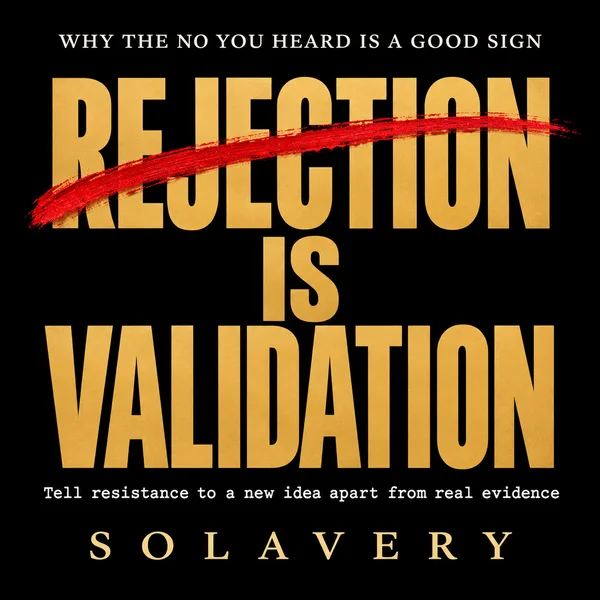
Rejection Is Validation
Distinguish resistance to a new idea from evidence that it needs to change.
Learn to interpret rejection, identify weak demand, address timing and trust gaps, and balance founder conviction with customer feedback.
- Pages
- 13
- Read Time
- 4 min
What's inside
This guide explores why unfamiliar ideas can meet resistance while warning that rejection alone does not prove demand. It distinguishes useful pushback from weak problem-solution fit and offers ways to respond to timing, value, priority, and trust gaps.
Understand Resistance to New Ideas
Unfamiliar approaches can conflict with established habits and expectations.
- Recognize that people often compare new ideas with what they already know.
- Expect objections to change as understanding develops.
- Look for early users who genuinely value the solution.
Know When Rejection Calls for Change
Persistent indifference can reveal a problem with the idea itself.
- Question whether customers actually have the problem.
- Notice when even ideal users will not try the solution.
- Compare the effort of adoption with the improvement delivered.
Decode the Type of Objection
Different objections suggest different next steps.
- Address timing concerns with demonstrations and proof.
- Use familiar comparisons when the idea challenges an existing mental model.
- Respond to value and trust gaps with clearer benefits and customer evidence.
Keep Conviction Responsive to Evidence
Persistence works best when feedback continues to shape execution.
- Look for recurring patterns rather than reacting to a single rejection.
- Continue shipping small improvements and building credibility.
- Keep the vision while listening to users who experience the problem.
Made for: Founders and would-be founders deciding what to build and how to keep going.
Then talk it through with Sol
Sol Avery is Solavery's founder coach. Sol is a virtual coach, not a person. Bring your own startup and work out what this book means for it.