Free ebook · 5 Min
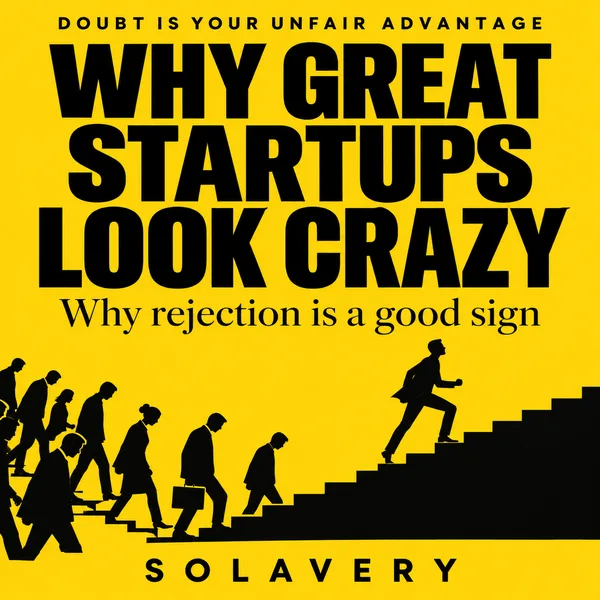
Why Great Startups Look Crazy
Why Rejection Is a Good Sign & How to Turn Doubt Into Your Unfair Advantage
Discover why the most successful companies started as 'terrible' ideas and how to leverage skepticism as your strongest signal for market potential.
- Pages
- 13
- Read Time
- 5 Min
- Case Studies
- 4
What's inside
This document explains why the most disruptive startups initially appear "crazy" or unrealistic to investors and the general public. It addresses the discouragement founders face during early rejection, reframing skepticism as a positive indicator of a market-changing opportunity rather than a failure. Readers will learn how to avoid the trap of "safe" ideas that are often too late and instead embrace unconventional visions as a competitive edge.
My Idea, Their Doubts
Learn why skepticism from friends and investors is often the first valid sign of potential.
- Why 'unrealistic' is a compliment
- Using doubt as fuel
- The danger of 'safe' ideas
Perfect Conditions
Identify the market conditions that look like dead ends but are actually golden opportunities.
- Why 'too niche' is perfect
- Navigating the 'too early' trap
- Ambitious solutions vs. existing markets
From Naïve to Visionary
Understanding the disconnect between what experts say and how users actually behave.
- Ignoring incumbents
- Spotting irrational user excitement
- Turning early adopters into evangelists
The Crazy Edge
How to utilize your 'unfair advantage' to disrupt industries that are stuck in their ways.
- Seeing what others miss
- Breaking the 'rules'
- Attracting bold talent
The Success Timeline
Mapping the journey from being called 'crazy' to being recognized as 'obvious'.
- The 4 stages of perception
- Avoiding the 'Too-Safe' trap
- Building for future users
Made for: Early-stage founders and aspiring entrepreneurs who are currently facing skepticism from investors, peers, or family regarding their unconventional business ideas.
Then talk it through with Sol
Sol Avery is Solavery's founder coach. Sol is a virtual coach, not a person. Bring your own startup and work out what this book means for it.